Personal Color Analysis
Color Analysis Dark Skin Guide: Undertone, Contrast, and All 12 Seasons
A reliable color analysis dark skin guide starts by throwing out the oldest myth in personal styling: that deep or rich dark complexions automatically belong to Deep Winter or Deep Autumn. Skin depth is only one of three color dimensions, and people with dark skin exist across every single season in the 12-season system—including Spring and Summer palettes.
Updated 2026-11-26 · GlowMap Editorial Team

Quick answer
- Every season exists across all skin depths: dark skin can be warm, cool, neutral, muted, or bright, spanning Spring, Summer, Autumn, and Winter.
- Melanin creates depth (value), not undertone—two people with identical skin depth can have completely opposite undertones (golden-warm vs. blue-cool).
- Avoid white-based chalky pastels and dusty beige near the face when they read ashy; match your palette's clarity and depth instead.
- Home wrist-vein tests are unreliable on deeper skin; white-paper and screen-flash lighting calibration in natural window light gives a far cleaner reading.
- Your photo stays on your device in GlowMap's browser analysis: discovering your season is free, with an optional one-time report via Stripe and no subscription.
Why Dark Skin Is Misclassified in Traditional Color Analysis
Early four-season color books from the 1980s were built almost exclusively around fair European complexions. Because those guides treated light skin as the default baseline, anyone with deep brown skin and dark hair was automatically pushed into Winter—or, if they looked good in gold, into Autumn. That shortcut collapsed two completely different traits into one: depth (how light or dark the surface color is) and undertone (the warm, cool, or neutral cast sitting underneath the surface).
In modern personal color analysis, depth never dictates your season on its own. Instead, a trained eye or calibrated tool evaluates three independent dimensions—temperature (undertone), depth (value), and chroma (clarity versus softness)—and sees how fabric colors interact with your skin. When melanin is abundant, your skin naturally holds rich saturation, which means certain light or bright colors can look electric and luminous on you rather than washed out.
Understanding this distinction is liberating. Instead of settling for a cramped stereotype of black, burgundy, and dark brown, you can explore the full 12-season system and discover whether your skin comes alive in sunlit corals, velvety muted blues, spiced earth tones, or crisp jewel shades.
How All 12 Seasons Show Up on Deep and Rich Dark Skin
Every season exists across all skin depths, including dark and very deep complexions. While Deep Autumn and Deep Winter are common because dark hair, dark eyes, and deep skin share naturally low value, many people with dark skin look far more vibrant in high-chroma Spring palettes, warm-rich Warm Autumn, or cool-leaning Summer and Winter families.
| Season family | Key traits on dark skin | Best color direction | Shades that often look ashy or dull |
|---|---|---|---|
| Spring (Bright Spring, Warm Spring, Light Spring) | Golden, peachy, or radiant warm undertone with crisp clarity in eyes and teeth. | Clear turquoise, bright coral, jade green, warm ivory, sunny yellow, and vibrant camel. | Dusty taupe, muddy gray-brown, chalky cool lavender, and dull khaki. |
| Summer (Cool Summer, Soft Summer, Light Summer) | Cool rosy, plum, or soft neutral-cool undertone with gentle, blended contrast. | Steel blue, raspberry, soft teal, plum, dusty rose, and slate gray without yellow. | Harsh orange, mustard yellow, rust, and overly heavy yellow-gold. |
| Autumn (Deep Autumn, Warm Autumn, Soft Autumn) | Golden, bronze, caramel, or warm olive undertone with rich earthy harmony. | Chocolate, deep teal, warm wine, burnt orange, olive, terracotta, and antique gold. | Icy pastel pink, stark optic white, neon fuchsia, and frosty silver. |
| Winter (Deep Winter, Cool Winter, Bright Winter) | Cool blue, red-violet, or neutral-cool undertone paired with clear definition. | Cobalt blue, ruby, emerald, true black, crisp white, sapphire, and icy accents. | Warm tan, muted olive, light beige, peach, and dusty camel. |
Notice how clarity separates palettes that share the same undertone. A person with deep warm skin and crisp, bright eyes often looks sluggish in muted olive from Soft Autumn, yet immediately radiant in the clean jade, turquoise, and bright coral of Bright Spring. Likewise, a person with deep cool skin and softer features may find stark neon pink from Bright Winter loud and distracting, while steel blue and raspberry from Cool Summer smooth their complexion effortlessly.
Bright Spring
High clarity and sparkle: vivid, clean colors with a warm undertone.
Cool Summer
Crisp coolness and polish: cool-toned, medium-depth colors without yellow warmth.
Warm Autumn
Rich earth and spice: golden, warm, saturated tones that echo autumn leaves.
Deep Autumn
Warm depth and richness: dark, opulent, earthy colors with cozy intensity.
Deep Winter
Bold depth and contrast: dark, cool, dramatic jewel tones make you stand out.
Cool Winter
Icy clarity and pure color: crisp, cool, saturated tones with zero warmth.
How to Find Your Undertone on Dark Skin (Without Broken Shortcuts)
Standard DIY quizzes frequently fail dark skin because their favorite shortcuts were designed for translucent fair skin. Looking at wrist veins is a prime example: higher melanin levels filter the appearance of blood vessels, making veins difficult to see or uniformly dark greenish-brown regardless of true undertone. The sunburn-versus-tan question fails for the same reason—deep skin rarely burns pink, even when its undertone is unmistakably cool.
- 1
Compare crisp white against warm cream in window light
Stand facing an open window with indoor lights turned off and bare skin. Hold pure, optic white under your chin, then switch to warm ivory or cream. If crisp white makes your skin look brighter and smoother while cream turns it slightly muddy or sallow, you lean cool. If cream makes your face glow and optic white looks harsh or chalky, you lean warm.
- 2
Test fabric colors, not just jewelry
The classic gold vs silver test helps, but bright yellow gold often blends attractively against rich brown skin even on cool undertones. Add a fabric check: compare cobalt blue or cool fuchsia against rust or mustard orange. Watch your jawline and under-eye shadows—the harmonizing side tightens shadows and evens skin tone.
- 3
Check your foundation undertone history
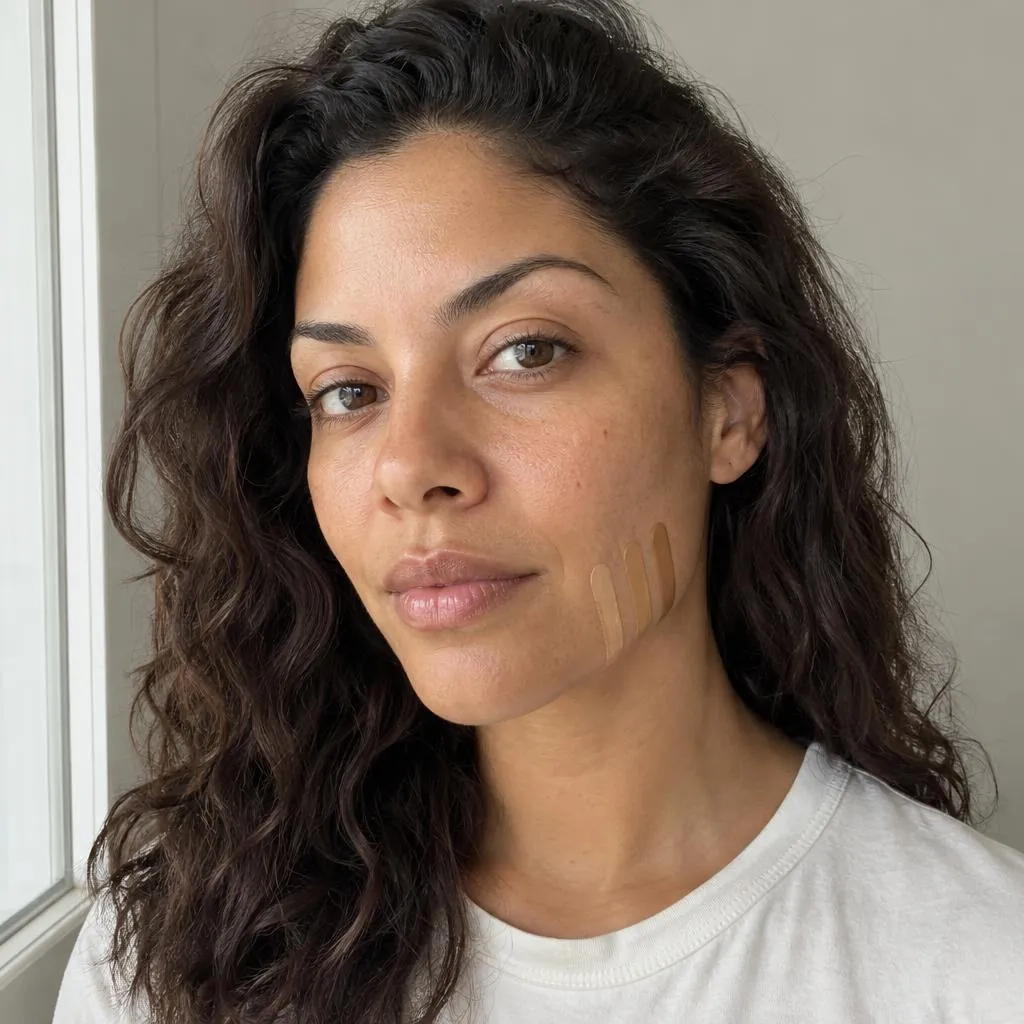
Look back at base products that looked wrong on you. If warm-labeled foundations turned aggressively orange, you are likely neutral or cool. If neutral shades looked gray or ashy on your cheeks, you probably need warmer golden or red-golden depth. Our guide on foundation undertone matching breaks down jawline swatching step by step.
- 4
Calibrate camera lighting with white paper and screen flash
Phone cameras aggressively shift brown skin toward orange or gray under household bulbs. Using a white sheet of paper next to your face plus a brief screen flash lets our free online personal color analysis remove ambient color casts before measuring skin hue.
Reading Contrast Accurately on Deep Complexions
Another common mistake in dark-skin color analysis is assuming dark skin automatically means high contrast. In fact, contrast measures the visual gap between your skin, hair, eyebrows, and eyes—not how dark each feature is by itself. A person with rich deep skin, black hair, and very dark brown eyes actually has low value contrast between skin and hair, because all three sit in the deep end of the lightness scale.
So where does high contrast come from on deep skin? Two places: first, chroma and brightness contrast (bright whites of the eyes, crisp teeth, glossy dark hair, or clear amber/hazel irises against deep skin); and second, tonal variation on lighter-to-medium brown skin paired with jet-black hair. When you know your real contrast level—explained in detail in our high contrast vs low contrast guide—building balanced outfits becomes much simpler.
What harmonizes with deep skin
- Rich neutrals matched to your undertone: espresso and dark olive for warm seasons; charcoal, midnight navy, and true black for cool seasons.
- Saturated, clean colors—emerald, cobalt, coral, deep teal, burgundy, and marigold—that honor melanin's natural richness.
- Sheer or clear light accents (warm ivory for Springs, icy blue or crisp white for Winters) that avoid chalky grayness.
- Tonal layering (espresso with caramel, or navy with slate) when your skin, hair, and eyes sit close in depth.
Common traps to watch near the face
- Chalky, white-heavy pastels mixed with gray—they often create an ashy cast along the jawline.
- Dusty beige or pale khaki worn directly at the collar if your season needs depth or clarity.
- Defaulting to all-black every day if you actually have warm golden undertones (try chocolate, deep olive, or warm charcoal instead).
- Judging colors under warm yellow bathroom bulbs, which flatter orange tones artificially and distort blues and plums.
Wardrobe, Hair, and Makeup Adjustments That Make the Biggest Difference
Once you know your season, focus first on what sits closest to your face: collars, lip colors, blush, eyewear frames, and hair highlights. Everything below the waist has far less visual effect on your complexion, so you do not need to replace your entire closet.
- Swap your everyday neutral: If you belong to Deep Autumn or Warm Autumn, replacing stark black tees and blazers with espresso brown, dark olive, or warm cream instantly softens under-eye shadows. Cool seasons like Deep Winter and Cool Winter thrive in true black, crisp white, and cool charcoal.
- Choose lip and blush shades by undertone and saturation: Warm deep complexions shine in terracotta, warm wine, cinnamon, coral, and deep brick. Cool deep complexions look luminous in berry, plum, burgundy, cool rose, and blue-based red. Avoid pale milky pinks with heavy white pigment unless layered over a deeper lip liner.
- Keep hair color anchored to your undertone: Honey, copper, golden chestnut, and caramel highlights brighten warm seasons without turning brassy. Blue-black, cool espresso, and deep burgundy or plum-tinted lowlights keep cool seasons looking crisp.
- Match eyewear and jewelry finish: Matte gold, aged bronze, and tortoiseshell frames echo warm seasons; polished silver, platinum, clear acetate, and cool dark frames flatter cool seasons.
Chocolate
Deep Brick
Dark Olive
Deep Gold
Sienna
Deep Teal
Warm Wine
Copper
Espresso
Warm Cream
True Red
Hot Pink
Electric Royal
Bright Emerald
Lemon Yellow
Vivid Violet
Cyan
Bright Raspberry
Black
Pure White
How Calibrated Online Analysis Works for Dark Skin
Many people with dark skin hesitate to try online color tools because standard phone selfies compress shadow detail or auto-brighten deep skin tones, shifting the color reading toward gray or orange. GlowMap addresses this directly inside your browser by combining three signals instead of relying on an uncalibrated selfie.
First, holding a plain white sheet of paper beside your face gives the camera a known neutral reference so ambient warm or cool light casts can be mathematically balanced out. Second, a controlled screen flash adds a predictable light pulse that checks how your skin responds under even illumination. Third, seven structured questions about hair, eyes, metals, and white-versus-cream cross-check the photo reading before assigning one of the 12 seasons. Your photo is processed locally in your browser and never uploaded to external servers. Discovering your season in the free color analysis is completely free, and if you want the complete palette, wardrobe, and makeup report, you can unlock it with a single one-time payment via Stripe—never a subscription.
Frequently asked questions
Can someone with dark skin be a Spring or Summer season?
Yes. Every season exists across all skin depths. Dark skin with a warm golden undertone and high clarity often fits Bright Spring or Warm Spring, while dark skin with a cool rosy or softly muted undertone can harmonize best with Cool Summer or Soft Summer. Skin depth alone never limits you to Winter or Autumn.
Why do pastel colors sometimes look ashy on dark skin?
Many mainstream pastels contain a large amount of opaque white and gray pigment. On deep skin, that chalky grayness can clash with natural richness and create a dull reflection near the jawline. Clearer light tones—like crisp icy blue for Winters or sunlit butter yellow and warm ivory for Springs—usually look far fresher than dusty pastels.
Is the wrist-vein test accurate for dark skin?
No. Higher melanin levels naturally mask or shift the visible color of veins beneath the skin, making the vein test unreliable on medium-deep and dark skin. Comparing crisp white against warm cream in daylight, testing fabric drapes, and running a white-paper calibrated analysis give much more accurate results.
How do I know if I am Deep Autumn or Deep Winter?
Both seasons love depth and richness, so temperature is the tiebreaker. Compare rust, olive, and warm cream against burgundy, cobalt blue, and crisp pure white in natural daylight. If warm earthy colors even out your skin and silver feels stark, look closely at Deep Autumn; if jewel tones and crisp white brighten your eyes and mustard looks muddy, Deep Winter is more likely.
Does GlowMap work accurately on deep and rich dark skin tones?
Yes. Because GlowMap calibrates ambient light with a plain white sheet of paper and a screen flash rather than guessing from an uncalibrated selfie, it accounts for camera exposure and color cast across all skin depths. Face a window with natural daylight so your face is evenly lit without harsh side shadows.
Does my photo get uploaded when I take the online analysis?
No. Your photo stays on your device and is analyzed locally in your browser—it is never sent to a remote server. Finding your season is free, and unlocking the full detailed report is an optional one-time payment via Stripe with no subscription.
Read next
 Skin Undertone TestWarm, cool, neutral, or olive: how to run a reliable skin undertone test in natural daylight and read the results.
 High vs Low ContrastHow to measure the lightness gap between your skin, hair, and eyes to choose balanced outfits, prints, and makeup.
 Foundation Undertone GuideMatch depth and undertone first, swatch on your jawline in daylight, wait for oxidation, and skip guesswork.
 Deep AutumnDark, opulent warm earth tones: chocolate, deep brick, dark olive, deep teal, warm wine, espresso, and deep gold.
 Deep WinterDark, dramatic cool jewel tones: true black, burgundy, midnight blue, deep emerald, indigo purple, and pure white.
Find your color season. It's free.
Season, undertone, contrast, palette, and makeup guide in 3 minutes.
Start my free analysis