Color Analysis Basics
Skin Undertone Test: How to Tell If You Are Warm, Cool, or Neutral
A reliable skin undertone test looks past your surface skin depth to identify the subtle hue underneath: golden or peachy (warm), rosy or bluish (cool), balanced (neutral), or subtly greenish (olive). Because no single home trick works for everyone, the best skin undertone test combines four quick daylight checks—or backs them up with white-paper photo calibration. Getting undertone right unlocks flattering makeup, jewelry, and your true color season.
Updated 2026-11-26 · GlowMap Editorial Team
Quick answer
- Surface tone vs. undertone: Surface tone is depth (fair, light, medium, tan, deep, very deep); undertone is temperature underneath. Very deep skin can be cool, and very fair skin can be warm.
- Four undertone types: Warm (golden, yellow, peach), cool (rosy, pink, bluish), neutral (balanced), and olive (subtle green or muted grayish cast).
- Never trust one test alone: Cross-check inner wrist veins, gold vs. silver metals, pure white vs. cream fabric, and sun reaction in natural window daylight.
- Undertone is not your full season: Warm can be Spring or Autumn; cool can be Summer or Winter. Depth and contrast narrow it down to one of the 12 color seasons.
- Verify objectively: Use GlowMap's free online analysis with a white sheet of paper—measured on-device so your photo never leaves your phone.
Skin tone vs. skin undertone: why people mix them up
When people describe their complexion as fair, medium, tan, or deep, they are talking about skin depth (also called surface tone or value)—how light or dark the skin appears overall. Undertone is completely separate: it is the subtle underlying warmth or coolness that stays consistent even if your surface tone deepens in summer or lightens in winter.
Mixing up surface tone and undertone causes two classic mistakes. First, people assume fair skin is always cool and deep skin is always warm—when in reality all four undertones exist at every single skin depth. Second, surface redness from rosacea, acne, or sun sensitivity often tricks warm-undertoned people into thinking they are cool, leading them straight to pink foundations that look chalky over their neck.
| Undertone | What sits underneath the skin | How clothes and makeup react |
|---|---|---|
| Warm | Golden, yellow, honey, or peachy hue | Coral, terracotta, olive, cream, and yellow gold make skin look smooth and radiant |
| Cool | Rosy, pink, red-violet, or bluish hue | Raspberry, cobalt, lavender, pure white, and silver brighten the complexion |
| Neutral | Even balance of warm and cool with neither dominating | Both gold and silver work; chroma and depth matter more than extreme warmth or coolness |
| Olive | Subtle greenish or muted grayish-yellow cast (can lean warm, neutral, or cool) | Muted earthy or cool-muted shades harmonize; bright orange foundations look garish and pink ones look chalky |
Remember too that undertone alone does not decide your season. Warm skin can belong to bright Warm Spring or rich Warm Autumn; cool skin can belong to airy Cool Summer or crisp Cool Winter. Depth and high contrast vs. low contrast complete the picture.
The 4-part skin undertone test you can do in daylight
Every single home test has blind spots—veins are harder to see on deeper skin, jewelry preferences are influenced by habit, and sun-tanning depends heavily on melanin level. Running all four checks together in indirect natural window light with zero makeup gives you a clear majority vote:
- 1
Test 1: Pure white vs. cream/ivory drape
Hold a crisp pure white T-shirt or printer sheet under your chin, then swap it for soft ivory, cream, or warm off-white. If pure white makes your skin look bright and clear while cream looks dingy, you lean cool. If cream makes your face glow while stark white looks harsh or gray, you lean warm.
- 2
Test 2: Gold vs. silver jewelry right next to your face
Compare yellow gold and bright silver earrings or chains against bare skin (skip personal style preference and watch your under-eye shadows and jawline). Gold harmonizes with warm undertones; silver clarifies cool undertones; if both look equally natural, lean neutral.
- 3
Test 3: Inner wrist veins in window light
Flip your forearm near a daylight window where skin is thin. Greenish or olive-looking veins suggest warm undertones (blue veins viewed through golden skin appear green); blue or purple veins suggest cool undertones; a mix of blue-green suggests neutral or olive.
- 4
Test 4: Lip and blush reality check
Compare a warm peach or coral lip/blush against a cool pink or mauve shade. Watch your whole face—whichever family makes your eyes clearer and skin smoother reveals your temperature immediately.
How to interpret mixed or confusing results
What if two checks point warm and two point cool? Do not force a label—mixed results are actually one of the most informative outcomes you can get. They usually point to one of three realities:
- True neutral undertone: Your skin genuinely balances warm and cool pigments. You likely sit in one of the neutral-leaning flow seasons—such as Soft Autumn, Soft Summer, Light Spring, or Deep Winter—where softness, lightness, or depth matters more than temperature.
- Olive undertone: Olive skin confuses almost every standard test because its subtle green-gray cast looks yellowish in warm light and cool or sallow next to stark white. Olive skin can be fair, medium, tan, or deep, and can lean warm-olive, neutral-olive, or cool-olive.
- Indoor lighting or surface redness: Checking your wrist under warm bathroom bulbs turns blue veins green, and facial redness can disguise golden undertones on your neck and chest. Always compare your neck and upper chest alongside your face in natural window light.
If your results keep splitting down the middle, try comparing two muted sister palettes side by side—Soft Autumn vs. Soft Summer—or test brushed gold against brushed silver rather than high-shine metals.
Why home undertone tests fail—and how white-paper calibration fixes it
Human vision adapts automatically to room lighting. Stand in a room lit by warm bulbs and your brain still perceives a white wall as white, even though yellow light is bathing your skin and skewing every swatch you hold up. Smartphone cameras do the exact same thing with automatic white balance, which is why selfies taken in two different rooms can make you look like two different seasons.
What improves undertone accuracy
- Facing a daylight window with indoor lamps turned completely off
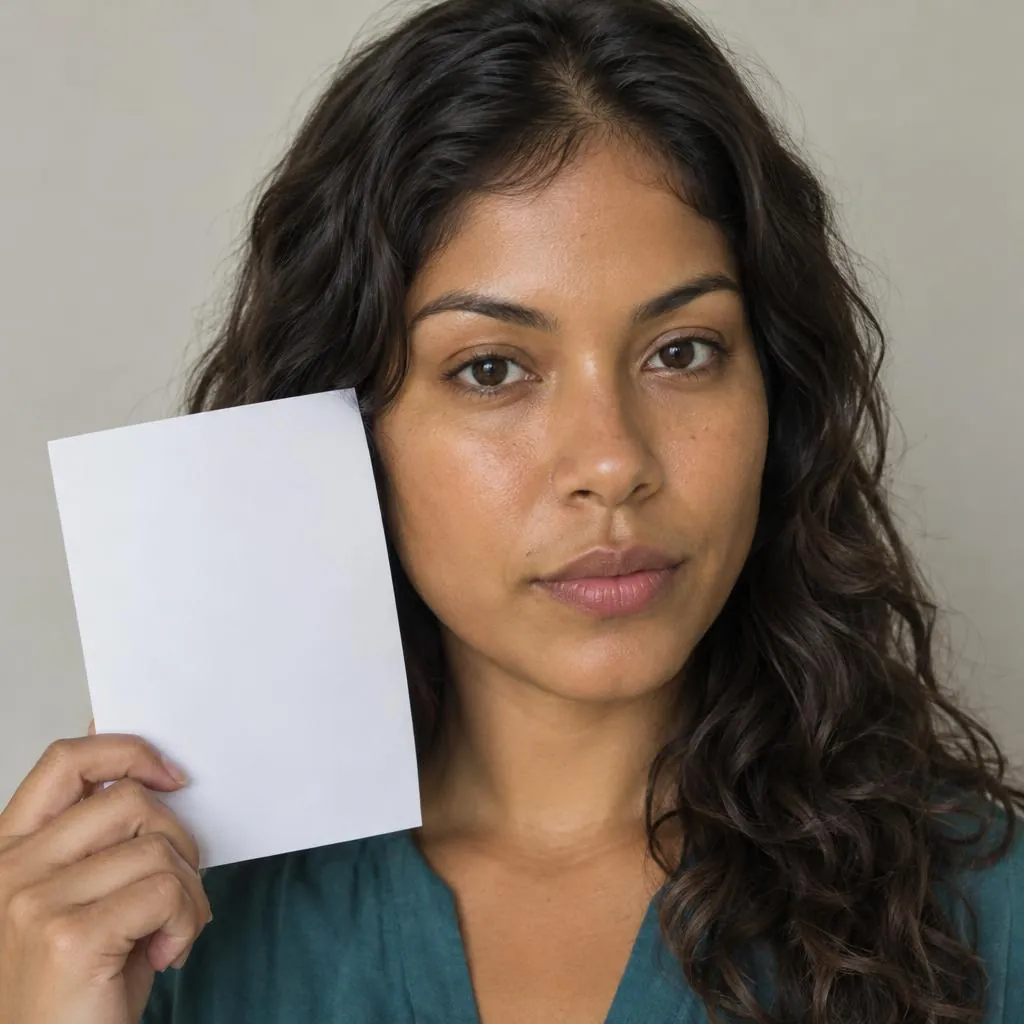
- Placing a plain white sheet of paper beside your face as a neutral reference
- Checking bare skin across cheeks, jawline, and neck together
- Combining objective measurement with your natural feature answers
What skews undertone results
- Testing under yellow vanity bulbs, ring lights, or overhead store LEDs
- Judging undertone over foundation, tinted sunscreen, or self-tanner
- Relying on a single wrist-vein glance in dim lighting
- Using camera beauty filters or automatic color-enhancing modes
That is why our personal color analysis online free method pairs 7 structured questions with 1 daylight photo holding a white sheet of paper plus a brief screen flash. Your photo is measured directly on your device and never leaves your phone, cancelling room-light color casts mathematically before classifying your temperature, depth, and contrast. If you are weighing DIY checks against professional draping, our breakdown of online color analysis vs. in-person outlines what each catches best.
What to do once you know your undertone
Knowing whether you lean warm, cool, neutral, or olive immediately simplifies three everyday areas:
- Base makeup: Combine your undertone with your depth range (light, medium, or deep) to narrow foundation and concealer options down to two or three testable shades—then finish with a daylight jawline swatch, since GlowMap gives depth range and undertone rather than an exact foundation shade number.
- Color cosmetics: Align lipstick, blush, bronzer, and eyeshadow with your temperature family using our color analysis makeup hub.
- Wardrobe and metals: Pair your undertone with your depth and contrast to pinpoint your exact match among the 12 color seasons, so your whites, darks, and jewelry work together effortlessly.
When you are ready to move from a hunch to a calibrated reading, head to the free online analysis facing natural window light.
Frequently asked questions
What is the most accurate skin undertone test at home?
No single home trick is foolproof on its own. The most accurate at-home approach combines pure white vs. cream fabric draping, gold vs. silver jewelry right next to your face, inner wrist veins, and a peach vs. cool-pink lip comparison—all done bare-faced in indirect natural window light—paired with white-paper photo calibration.
How can I tell if I have an olive skin undertone?
Olive skin has a subtle greenish or muted grayish-yellow cast underneath. Clues include warm foundations looking too orange, cool pink foundations looking chalky, mixed vein colors, and muted earthy or cool-muted colors looking better than bright neons. Olive undertones appear across fair, medium, tan, and deep skin.
Can dark skin have a cool undertone?
Yes. Skin depth and undertone are completely independent. Deep and very deep skin tones can have warm golden, cool rosy/bluish, neutral, or olive undertones, and every one of the 12 color seasons exists across all skin depths.
Why do my veins look both blue and green?
Seeing a mix of blue-purple and green-teal veins usually points to a neutral or olive undertone—meaning your skin sits near the balance point between warm and cool rather than at an extreme.
Does tanning change my skin undertone?
No. Tanning deepens your surface tone (depth) and can temporarily shift your contrast level, but your underlying warm, cool, or neutral undertone stays consistent year-round.
How does GlowMap test skin undertone online?
GlowMap combines 7 feature questions with 1 daylight photo holding a white sheet of paper beside your cheek plus a brief screen flash to cancel lighting casts. Your photo is measured on-device and never leaves your phone. Discovering your season is free; the full color report with undertone, depth, contrast, and palette is a one-time payment via Stripe, with no subscription.
Read next
 Gold vs Silver TestHow to run the gold vs silver test in daylight, avoid finish traps, and read warm, cool, or neutral undertones.
 Color Analysis for Olive SkinWhy olive skin confuses undertone quizzes, how to tell warm from cool olive, and which 12-season palettes flatter it.
 Color Analysis for Dark SkinHow undertone, contrast, and chroma work on deep and rich dark skin—and why every season exists across all skin depths.
 Foundation Undertone GuideMatch depth and undertone first, swatch on your jawline in daylight, wait for oxidation, and skip guesswork.
 Personal Color AnalysisWhat personal color analysis is, the 3 color dimensions, the 12 seasons, and how to find your palette accurately.
Take the calibrated undertone and season analysis free.
Season, undertone, contrast, palette, and makeup guide in 3 minutes.
Start my free analysis